
Skip to content
1-on-1 live classesCertified female teacher
Call now +92 305 9637306
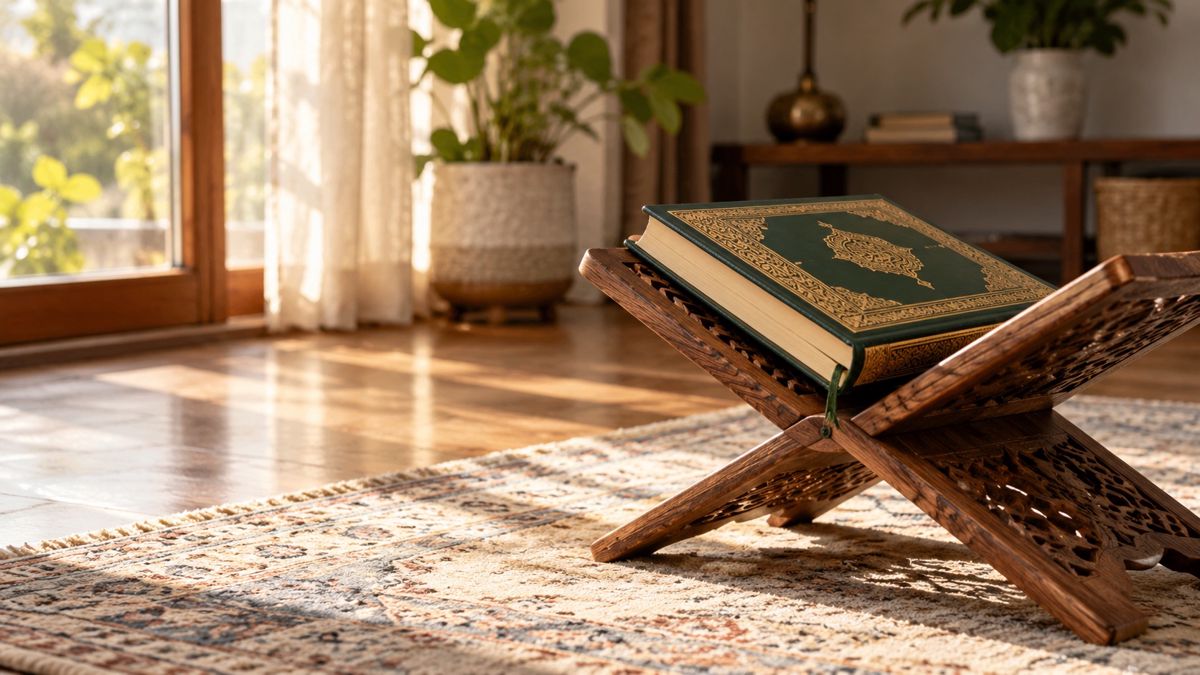
Closed Quran on a wooden rehal beside a sunlit window

How we teach

Online Quran classes for kids that stay calm, clear and focused

Private 30-minute lessons on Zoom with a digital pen and on-screen slides, taught with patience and positive reinforcement for young children.

  • Live one-to-one on Zoom
  • Digital pen and on-screen slides
  • Stickers, duas and stories of the Prophets

How do online Quran classes for kids work here?

Each lesson is live, private and one-to-one on Zoom with Ustadha Ayesha Azmat. There is no group and no recorded video to watch alone. Your child has the teacher's full attention for the whole class.

Classes are 30 minutes long. Young children do well in short, focused sessions, so we keep the lesson tight and finish before attention fades. You can choose two, three or five classes a week, and times are booked around your family's time zone.

Why a digital pen and on-screen slides?

Children understand what they can see. Ustadha Ayesha writes on the shared screen with a digital pen, so the child watches a letter being formed, a sound being marked or a word being split into parts. Slides carry the lesson plan and keep the child's eyes on the same place as the teacher's.

  • Letters and harakat are shown large and clearly.
  • The teacher can circle or underline the exact part a child is stuck on.
  • Pictures and simple prompts keep younger children interested.

This visual method is especially useful for Noorani Qaida, where a child learns letter shapes, makharij and the harakat. See the Noorani Qaida course for more on that stage.

What happens inside a 30-minute class?

The exact shape depends on the child's level, but a lesson usually moves through a few simple parts.

  1. A warm greeting and a quick look back at the last lesson.
  2. The new part of the lesson, introduced on the slides with the digital pen.
  3. Reading or reciting aloud while the teacher listens and corrects gently.
  4. A short closing: a masnoon dua, a point about manners or a story of the Prophets.

For children who are memorizing, the lesson follows the familiar rhythm of sabaq, sabqi and manzil. For children learning to read with Tajweed, correction is step by step, one rule at a time. Details are on the Tajweed course and hifz course pages.

Ustadha Ayesha uses positive reinforcement. She notices what the child did well before she corrects what needs work, and she gives reward stickers on screen for effort and for getting a sound right. Children often ask to collect more, which makes practice feel like a game rather than a chore.

Mistakes are expected and handled kindly. A child who is not afraid of getting it wrong will keep trying, and that is what builds a steady habit.

Alongside reading, classes include daily duas, manners and stories of the Prophets, so the lesson reaches the child's heart as well as the tongue. You can see this in our Islamic studies and duas program.

What should parents expect over time?

Every child moves at a different pace. Age, practice at home and regular attendance all make a difference, so we do not promise a speed or a result. After the trial class, the teacher will describe a realistic pace for your child, and progress is shared with you as lessons go on.

A parent who sits nearby and encourages a few minutes of daily practice helps more than any technique. If you would like to see the method in action, request the free trial class.

1-on-1 live classes
Certified female teacher
30-minute lessons
Free 3-day trial

How it works

  1. Step 1

    Request a free trial

    Fill in the short form or message us on WhatsApp.

  2. Step 2

    We arrange the trial

    A class time that suits your time zone.

  3. Step 3

    Decide after the trial

    Pick a plan if it feels right for your child.

Request a free trial class

Tell us about your child and we will message you on WhatsApp to arrange the trial.

Include the country code, for example +1, +44 or +92. We reply to you on WhatsApp.

No obligation.

Questions about kids quran teacher in United States

Why are classes only 30 minutes?

Young children tire quickly, and a long class often means the last part is wasted. Thirty minutes gives enough time to review, learn something new and practice aloud, while the child is still alert. Short classes also make it easier to fit lessons into a school week and to practice again the next day.

Do you use any special software?

Classes run live on Zoom. The teacher uses a digital pen and on-screen slides on the shared screen. Your child needs a laptop, tablet or computer with a camera, a microphone and a steady internet connection. If you are unsure about setup, ask us on WhatsApp and we will help you get ready before the trial.

What are reward stickers for?

Stickers are a small, friendly way to recognize effort and correct recitation. They appear on the screen during class and encourage a child to keep trying. They are not a grade and are not a promise of any result. They simply make learning feel positive for younger students.

Does my child need to know Arabic before starting?

No. The method is designed for children who do not speak Arabic at home. Lessons start from letters and sounds if needed, and move forward only when the child is ready. The teacher speaks English, Urdu and Arabic, so she can explain a point in a way your child understands.

Can a parent watch the lesson?

Yes, parents are welcome to sit nearby, and for young children we suggest a parent stays close. Classes are private and one-to-one. If you have questions about how a class is run or who teaches it, please ask us before enrolling. We are happy to explain.

Ready to book the free trial?

Fill in the short form or message us on WhatsApp and we will arrange a trial class for your child.

Book a free trial
Chat on WhatsApp