
Short answer: teach daily duas, wudu and salah to young children through small, repeated habits tied to things they already do, and through your own example. A child learns a dua most easily by saying it with you every day before a meal or at bedtime. A child learns wudu and salah by watching, joining in and being praised for trying. Patience and routine matter far more than perfection.
This guide offers practical ideas for parents. It is not a set of religious rulings. Details of wudu and salah can differ between schools of thought, so teach what your family follows and ask your own scholar if you are unsure.
Start with the home, not the lesson
Young children copy what they see. If they watch you say bismillah before eating, say salam when you come in, and stop for prayer, they absorb a great deal before any formal teaching begins. That is a good thing to remember on days when a lesson goes badly. The home is where Islamic habits are formed, and a weekly class only supports it.
It also helps to keep everything light. A child who associates these things with warmth and attention grows up wanting to do them.
Daily duas: attach them to routines
The simplest way to teach a dua is to link it to a daily moment. The moment itself reminds the child, so you do not have to.
- Before and after eating.
- When waking up and when going to sleep.
- When leaving the home and when coming back.
- Before getting into a car or onto a bus.
- When sneezing, and when hearing someone else sneeze.
- When entering and leaving the bathroom.
Begin with one dua and keep it for a week or two before adding another. Say it slowly, with the child, and let the child say the whole thing on their own when they are ready. Learn the meaning in simple words as well, such as thanking Allah for food, so the child knows what they are saying. Short masnoon duas are learned most reliably from a teacher or a trusted book so the wording is exactly right.
Wudu: let them watch, then help, then try
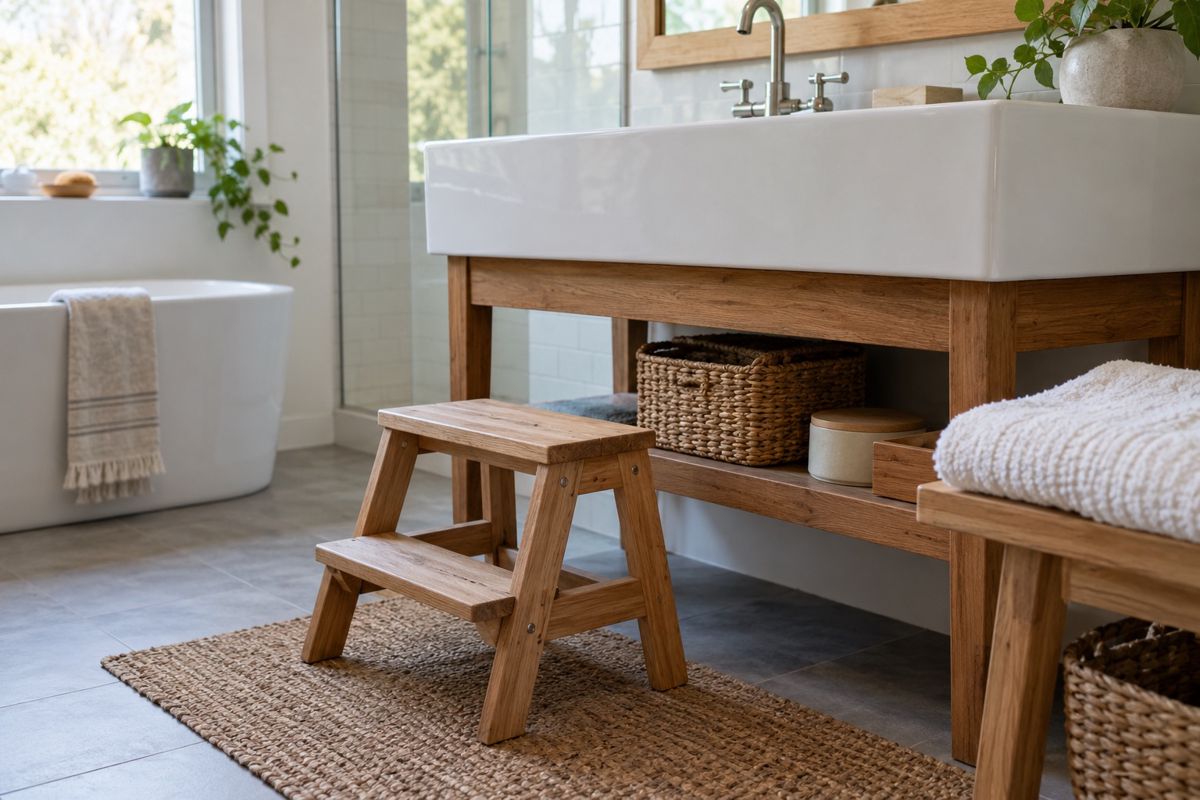
Wudu is a good example of a skill that a child learns in three steps: watching you, doing it with your help, and doing it alone. A small stool at the sink, sleeves rolled up and a towel nearby make it much easier. Some families use a small jug or a low tap for the youngest children.
- Show the steps slowly while the child watches, naming each one.
- Do it together, with your hands guiding theirs.
- Let the child lead, and only remind them of a step if they forget it.
- Praise the effort, not only the result.
Expect splashing, forgotten steps and a lot of giggling. That is part of learning. The order of the steps and the finer points are taught by your teacher or your family's practice, so do not worry if you are learning them alongside your child.
Salah: build the habit before the details
With salah, the first goal is a love of standing together to pray. Let the child see you pray, give them their own small prayer mat, and invite them to stand beside you. At first they may only copy the movements, and that is fine. Details, such as the words and the order of the positions, come bit by bit as the child grows.
- Choose one prayer to pray together every day, such as maghrib, when the family is usually at home.
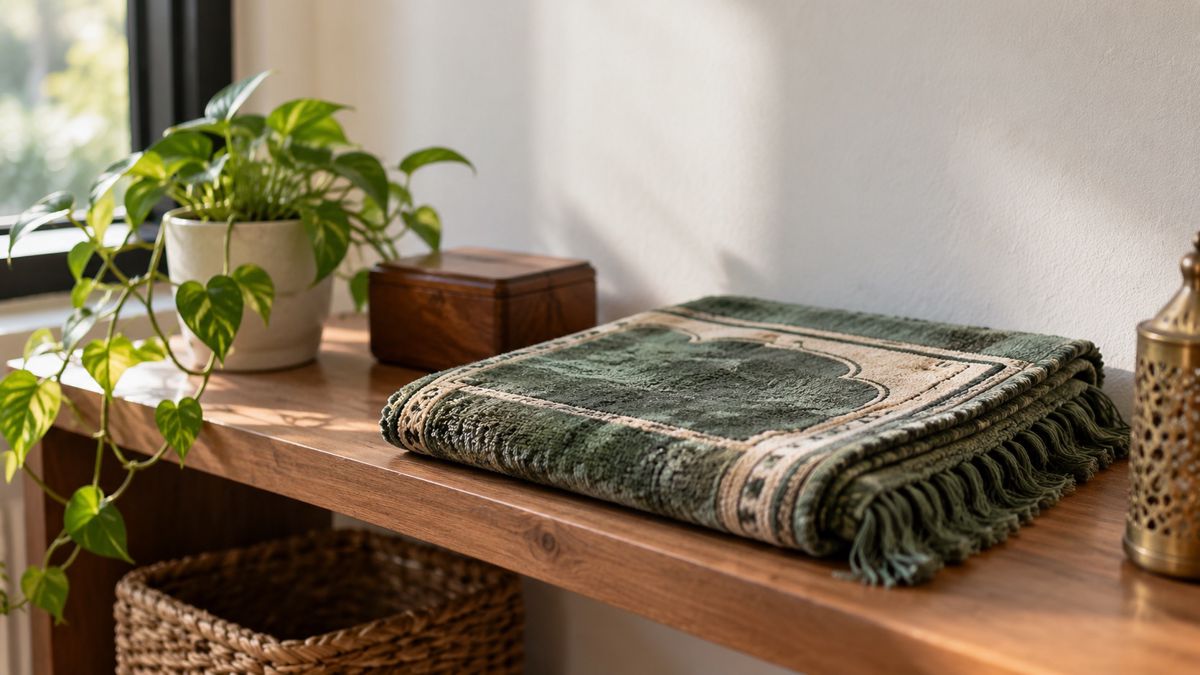
- Keep the prayer mat somewhere clean and easy to reach, folded and ready.
- Teach a little at a time: first the movements, then the short surahs and phrases, then the meanings.
- Be gentle about mistakes. Correct one thing at a time, and never in front of others.
- Talk about why we pray, in simple terms: to thank Allah and ask for his help.
When and how salah becomes a duty for a child is a matter for your scholar, not for a lesson plan, and it is worth discussing with someone you trust.
Add manners and stories
Islamic learning for children is not only prayers and recitation. Manners are taught the same way: say salam, say please and thank you, share, and speak kindly to parents and siblings. Short stories of the Prophets, told in simple words, give children a picture of honesty, patience and kindness. Keep each story brief and ask the child a question afterwards, such as what they liked about it.
Keeping it realistic
A few ideas help families stay consistent.
- Pick a fixed time each day, even if it is only five minutes.
- Use a simple chart with stickers, so the child can see their own progress.
- Skip the day gently if the child is ill or very tired, and return to it tomorrow.
- Avoid comparing your child with cousins, friends or classmates.
- Ask for help from a teacher when a habit does not stick.
Progress depends on the child's age, mood, practice at home and regularity. Some children take to a routine at once, and others need many weeks of gentle repetition. Neither is a sign of anything wrong.
How a teacher can help
A live teacher can reinforce what you do at home, correct the wording of a dua, and make the lesson enjoyable with stories and stickers. Our Islamic studies and duas course covers daily duas, manners, wudu and salah in short, gentle lessons. A parent is welcome to sit nearby, and the teacher will describe a realistic pace after a trial class.
If you would like to ask about it, message us on WhatsApp at +92 305 9637306 and tell us your child's age and what they already know.