
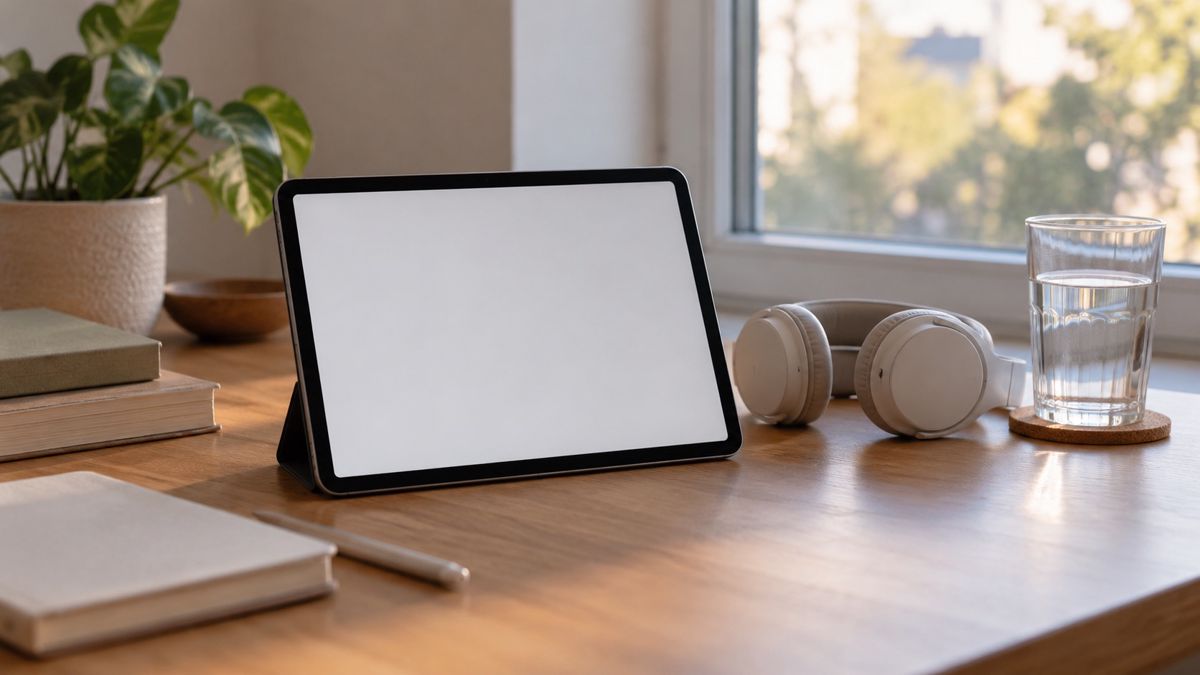
Short answer: a one-to-one online Quran class for a young child is a short, calm, live lesson on a video call, where one teacher works with one child on a small amount of material and repeats it until it feels easy. At Kids Quran Teacher a class runs for 30 minutes on Zoom, with the teacher using a digital pen and on-screen slides. This guide walks through what usually happens from the first minute to the last, so you know what to expect before the first class.
Every family and every child is different, so treat this as a picture of a typical session and not a script. The teacher adjusts the pace to the child in front of her, and that is the main reason one-to-one lessons suit young children.
Before the class starts
A little preparation makes the first class far smoother. You do not need special equipment, only a few simple things.
- A tablet, laptop or computer with a working camera and microphone. A phone can work in an emergency, but a larger screen is easier for a small child to follow.
- Headphones, if your home is noisy. They also help the child hear the teacher's pronunciation clearly.
- A quiet corner with a table or a firm cushion at a comfortable height, away from the television and from siblings playing.
- The child's Noorani Qaida or Quran, kept clean and placed on a stand or a clean surface.
- A glass of water and a few minutes of calm beforehand, so the child is not rushed straight from play or school.
Many families like the child to be fresh from wudu before touching the Quran. If that is part of your home routine, build it in before class. If you are unsure how to handle it for your child's age, ask your own scholar or the teacher.
The first few minutes: greeting and settling in
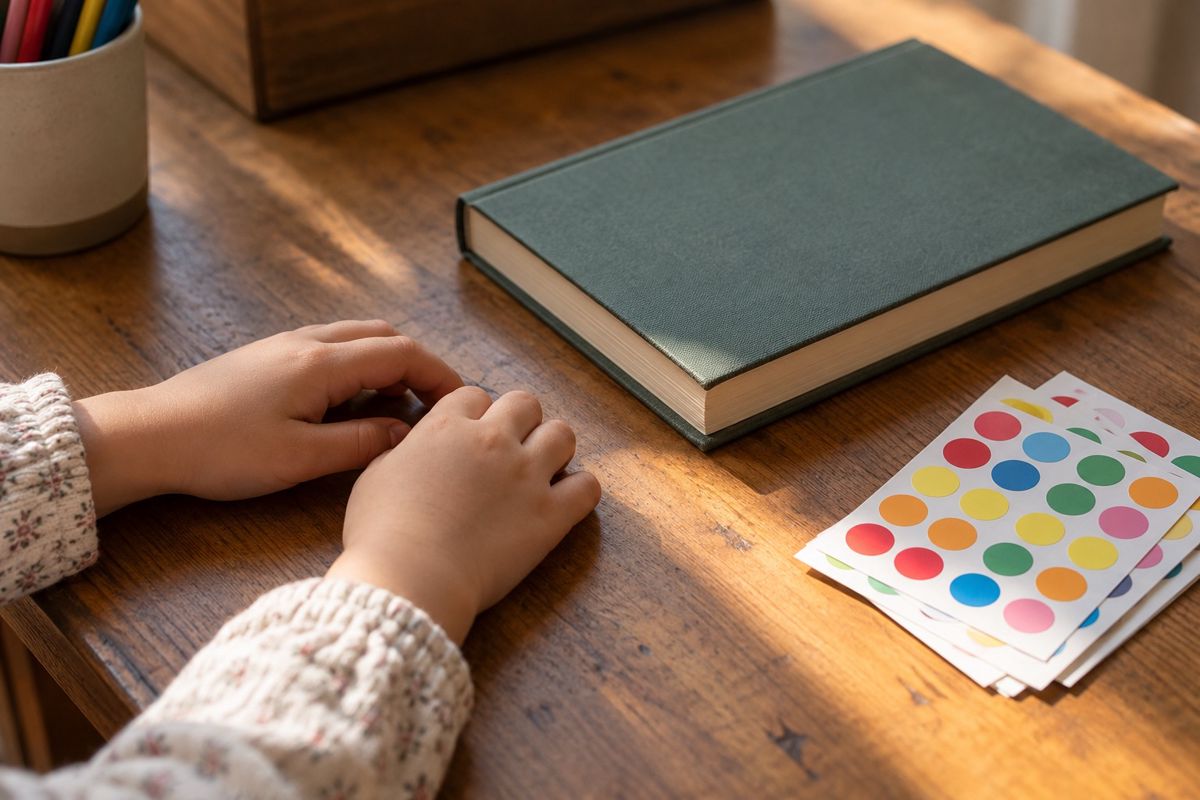
A good class opens gently. The teacher greets the child with salam, asks a simple question about the day, and says a short opening dua together with the child. For a shy or tired child this warm-up matters more than it looks. A child who feels relaxed learns faster than a child who feels tested.
In the very first class, the teacher mostly listens. She asks the child to say a few letters or read a short passage, if the child can, and notices what the child already knows. There is no pass or fail. The aim is to find a sensible starting point, whether that is the letters of the alphabet, joining letters into words, or reading with tajweed.
The middle of the class: one small goal
The main part of the lesson is built around one small goal. For a beginner it might be three or four letters, or one short line. The teacher shows the material on a slide, points to it with the digital pen, says it slowly, and asks the child to repeat. This is the heart of a live one-to-one lesson: the child hears the sound, watches the mouth and the pen, says it back, and gets a correction straight away.
Young children cannot sit still for long, so the lesson changes activity often.
- Listen and repeat a letter, sound or line together.
- The child reads it alone while the teacher follows along with the pen.
- A gentle correction, with the teacher saying it again and the child trying again.
- A short change of pace, such as spotting a letter on the slide or answering a quick question.
- One more read, so the lesson ends on something the child can do.
Corrections are meant to be kind and specific. Instead of telling a child that a sound is wrong, the teacher might show where the tongue or lips should be and let the child try again. Positive reinforcement and reward stickers are part of how the lesson keeps a small child motivated.
The last minutes: revision, a little extra and a closing dua
Near the end, the teacher goes back over what was learned, so the lesson is repeated before the child leaves the screen. Depending on the course, the class may also include a daily dua, a point of manners, or a short story of the Prophets, told in simple words. The class closes with a short dua and a goodbye.
The teacher usually suggests a small amount to practice before the next class, such as reading one line twice a day. Small and regular practice is much more useful than a long session once a week. This is also where a parent can help most.
What a parent can do
For young children we suggest that a parent stays close during class. That does not mean sitting over the child's shoulder or answering for them. It means being nearby, helping with the technology if the video freezes, and noticing what the teacher asks the child to practice.
- Join for the first minute to say salam and meet the teacher.
- Stay within earshot, so you can hear how the lesson is run.
- Let the child answer on their own, even if it takes a moment.
- Afterwards, ask the child to show you what they learned, and praise the effort.
- Do the small practice together at the same time each day.
Classes are private and one-to-one, and parents are always welcome to sit nearby. If you ever have a question about how a class is run, ask the academy directly.
How quickly will my child progress?
Honest answer: it depends. A child's age, attention span, earlier exposure to Arabic letters, the amount of practice at home and how regularly the classes happen all make a difference. Two children of the same age can move at very different speeds, and both can be doing well. No teacher can responsibly promise a fixed number of weeks for a child to read fluently.
What a teacher can do is describe a realistic pace after seeing the child. That is the purpose of a trial class: the teacher meets the child, you see how the lesson feels, and you decide whether to go ahead. You can read more about the lesson method on our how we teach page.
Questions to ask any online Quran class before enrolling
Whichever academy you choose, it is reasonable to ask a few questions first. Who exactly will teach my child, and what is her background? How is the class run, and can I sit nearby? What happens if we travel or miss a class? How are time zones handled? A good academy answers these plainly, without pressure.
If you would like to talk it through, send us a message on WhatsApp at +92 305 9637306 and tell us your child's age and country.